

Live Data Physical Installation w/ Sanity + SvelteKit
We built the backend for Stripe's viral Black Friday campaign — live data, clever animation, and enterprise-grade reliability.
A component system and structured CMS that turned rigid pages into content Rill's marketing team, and their agents, can change on their own.

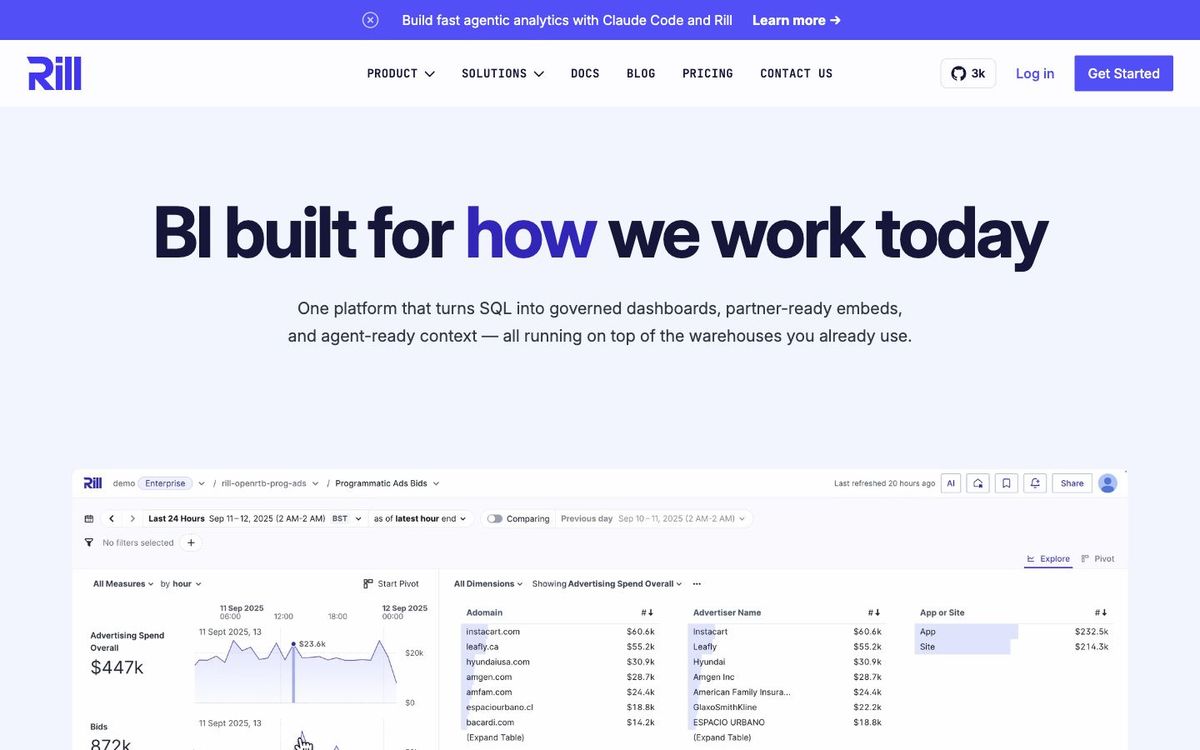
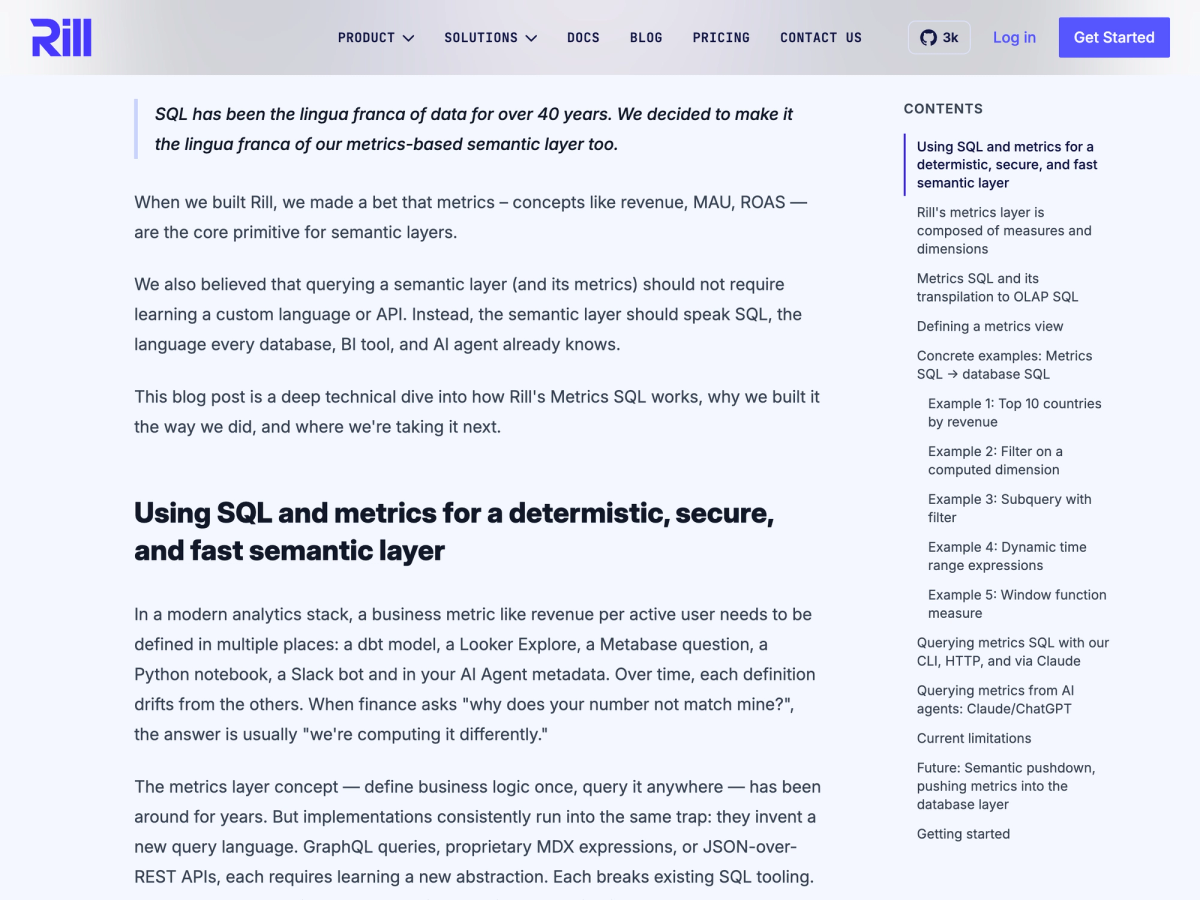
Rill builds the fastest business intelligence tool for humans and agents, with customers like Comcast, AT&T, and The Trade Desk. However, their marketing site couldn't keep up with them, and finally they hit an inflection point and it was time to make a change.
The site ran on Webflow, which was okay for simple text edits. But Rill's founder and incoming CMO had bigger plans: a new pricing page, changes to how they onboard free-trial users, and on top of that, a visual refresh. Rill's in-house developers were willing to help, but they didn't know Webflow, and they wanted to use the same AI coding tools they already rely on for Rill's product code.
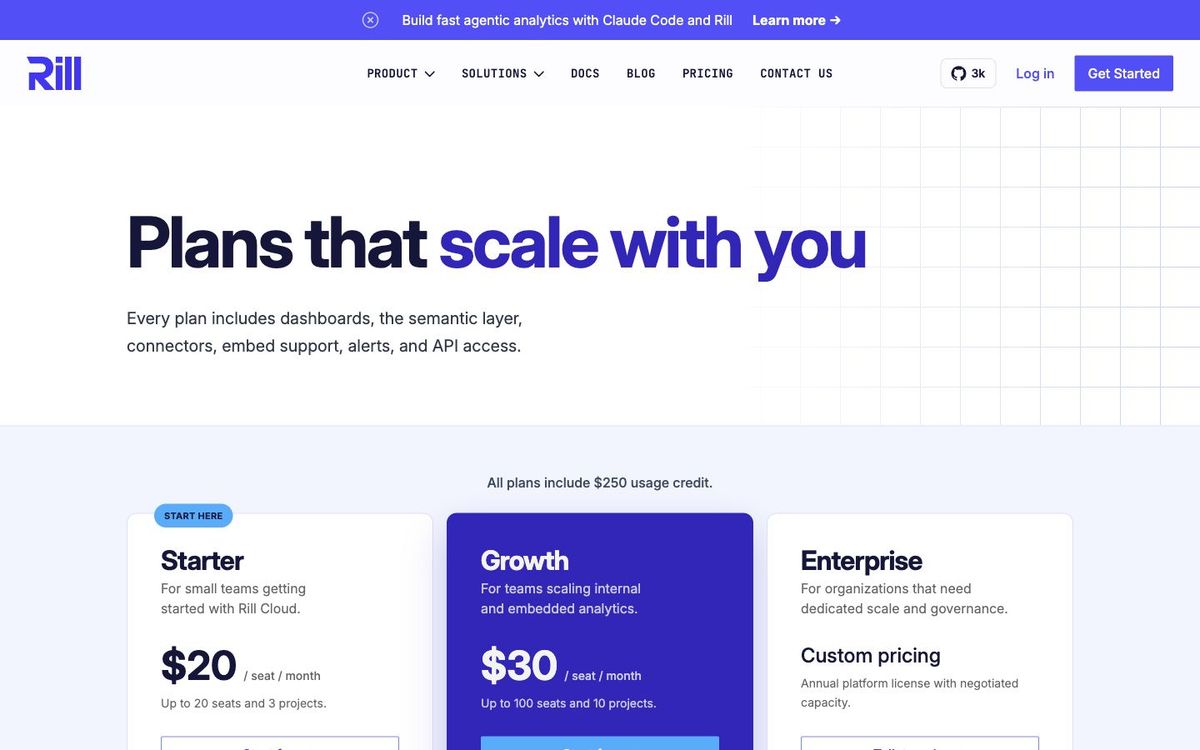
Pricing was the sharpest example. It's the second-most-visited page on the site, and the team had packaging changes in mind and wanted room to experiment. Every price point and feature line was baked into a static page layout, though, so changing a number meant reworking a design.
Rill came to us knowing they wanted Astro, and they'd already put some Astro content on Netlify. Both are stacks we know well, so we backed the call and got to work. For CMS-driven content we recommended Sanity, and as we talked through what Rill actually needed, we pushed to expand Sanity's role well past blogs and case studies into a full visual page builder, drawing on Corey Moen's open-source mast-sanity project.
Design was a collaboration, which is exactly why they hired us. Rill's CMO and in-house designer set the direction for a light brand refresh. They kept the blue-purple shade we nicknamed "rindigo" (for "Rill Indigo") but traded the dark theme for a light one, and handed us Figma mockups and Claude Design wireframes for the key pages. We filled in everything around them: responsive layouts, fluid typography, interior pages that had no mockups at all, and a component library built on the open-source Web Awesome project.
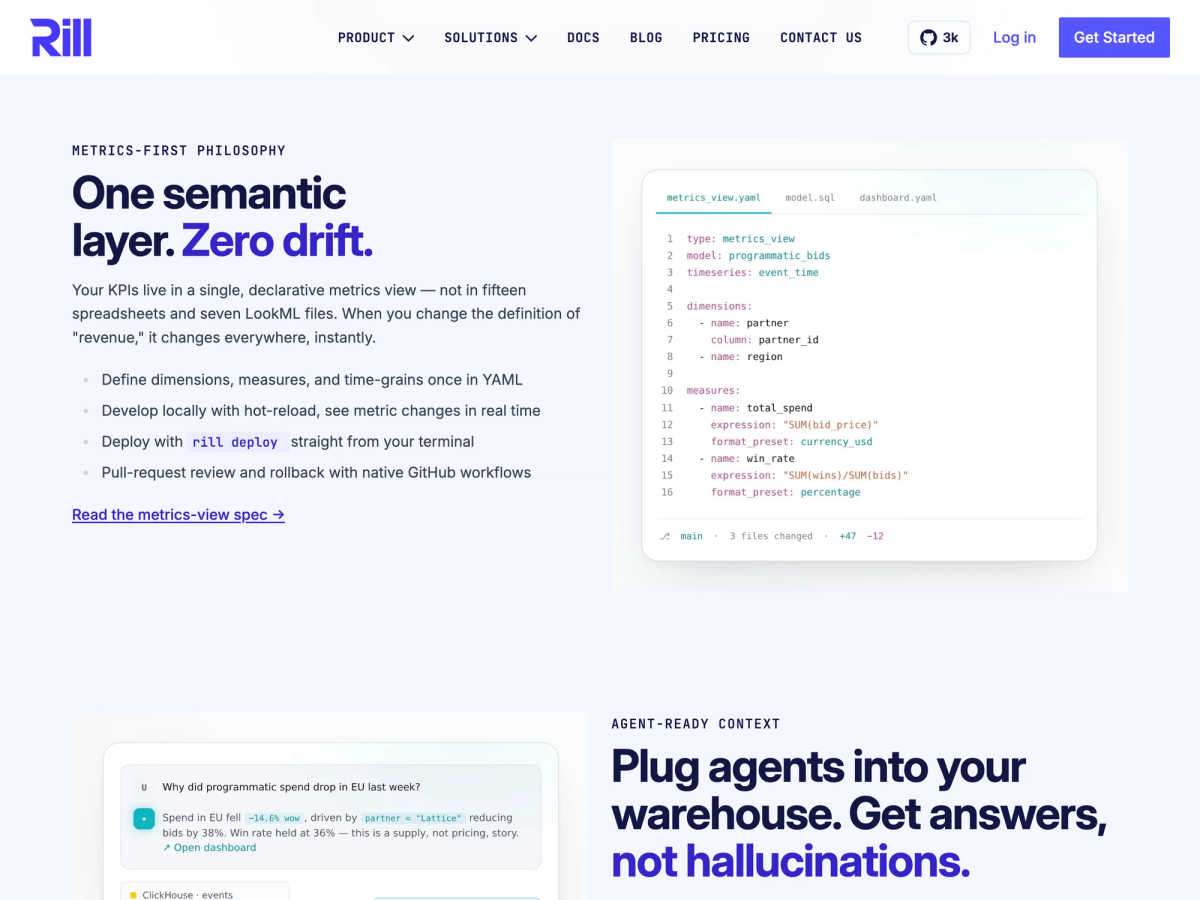
Not every page needed the same treatment. Home and Pricing are Astro templates, managed as code in Git. The Product Overview page is assembled in Sanity from that component library, with live visual editing, so Rill's team can rearrange sections or build new pages without a developer.
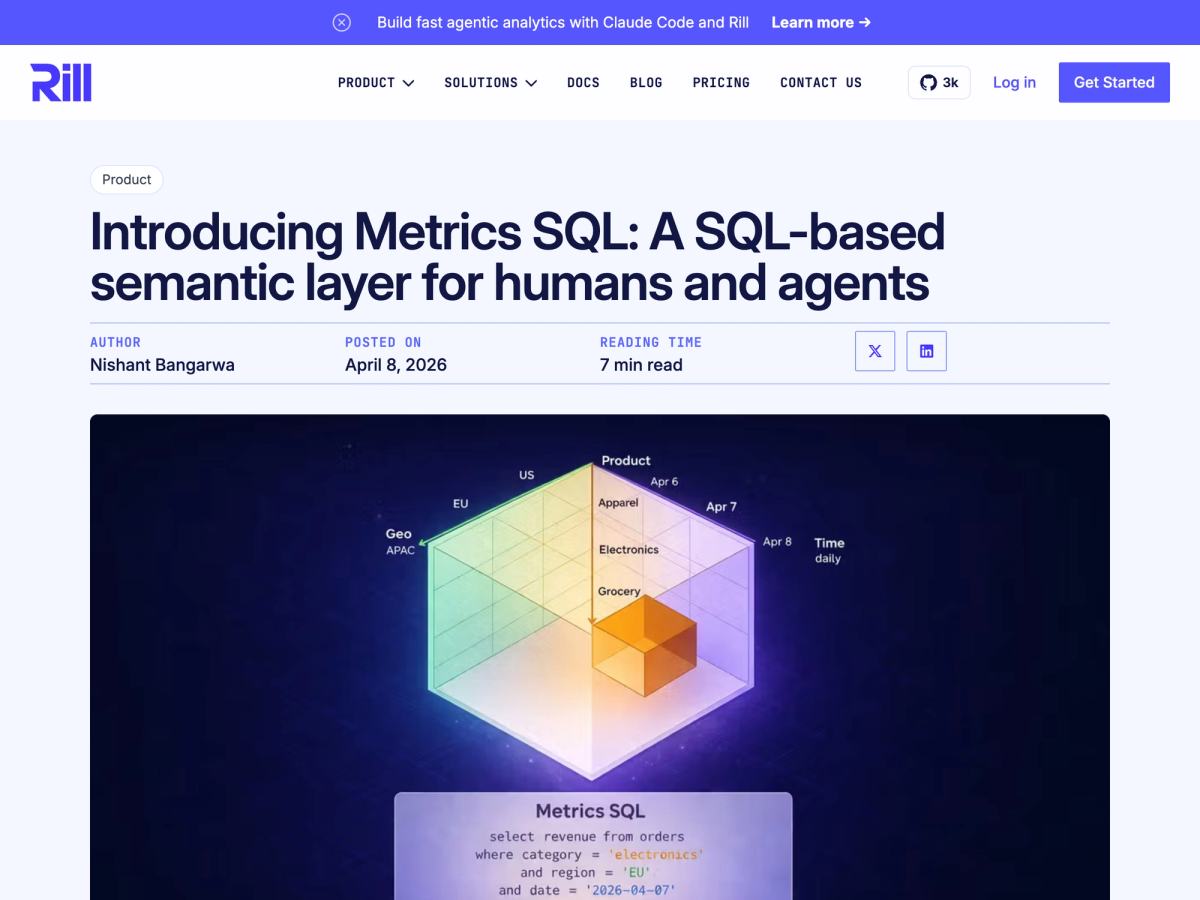
The homepage and product overview were getting all-new copy and outlines from the CMO, so we built those from scratch. Everything else came over from the old site: Codex pulled the pricing page (including its interactive cost calculator), every blog post, and every case study out of the production Webflow site and into the new codebase and Sanity dataset.
We kicked off with weekly check-ins in mid-March and delivered a complete release candidate on schedule in late May. To launch sooner, we skipped the big-bang migration. Rill's engineers set up Cloudflare page rules that sent already-migrated URLs to the new site on Netlify and everything else to Webflow, and the new site went live in mid-June.
Since launch, Rill's team has finished the migration on their own, with almost no direct involvement from us. Moving the remaining pages took about a week and a half of actual work, and today the whole site runs on Astro.
They can publish through Sanity Studio, through agents like Claude Code and Codex working in the codebase, or both at once, with Claude using Sanity's MCP server to update content alongside the matching code changes. In practice, every page added since handoff was built partly or entirely by Rill's team working with Claude.
Pricing is now structured data in Sanity, and it got a real-world test before the site even launched. Mike, Rill's founder, and the marketing team were still tuning their packaging as we finished the build. After handoff they changed the free tier's limits and the paid tier's monthly price as data, without touching the layout. The same data can show up in components and landing pages without falling out of sync.
Performance wasn't an explicit goal, but it improved anyway. The homepage's desktop Lighthouse score went from 68 on the old Webflow site to 97 on Astro.
The structure-first approach pays off in less obvious ways, too. A site built from structured content is easier for LLMs to read, both the agents working in the codebase and the chatbots reading the site on a customer's behalf. It also makes integrations practical that would once have meant a rewrite, like making Rill's Stripe subscription backend the source of truth for plans and syncing changes into Sanity automatically.
Beyond his deep expertise in web design and development, David’s experience as a product executive allowed him to understand our business. He was able to discuss the layout of our pricing page, for example, with a business strategy lens not just a design perspective.
Updates that used to take a day and involve several steps can now be done in minutes.
We built the backend for Stripe's viral Black Friday campaign — live data, clever animation, and enterprise-grade reliability.


A lush, video-rich new brand experience delivered in just 8 weeks, with near perfect Lighthouse & Core Web Vitals scores

We’ll help you find the way forward.
We scope and price each project after a first conversation.
Talk to an expert