


When AI can write your code, do you still need a CMS?
It’s less about the tooling and more about who needs to change which parts of your website at which speeds.
Vibe code cleanup
Lovable, v0 and Claude Code make it fast to get a site live. We help you turn it into a site your team can edit, keep on-brand and keep building on.
The problem
AI builders get some real things right. One marketer who wrote about their migration on LinkedIn reported taking their Lighthouse score from the mid-60s to 95 without a developer. But day one can make you feel like Superman, and by day ten your keyboard may feel like it’s made of Kryptonite.
Running a site is a different job from building one, and it gets harder once more than one person needs to change it. Every change goes through you, or through an agent that answers in the language of Git: a branch, a pull request and a preview build. A teammate who wants to swap a headshot or update the Terms of Service can learn that workflow, or ask whoever built the site.
The longer version is in David’s post, No-code, vibe-code, same problems.
We keep what works and add the parts a site needs once a team depends on it. Some of those parts are software, and AI tools can help build them. The rest is how your team works: what you publish, who writes it, who reviews it, and how it gets from idea to live page.
We read the code, run the site and write up what to keep, what to fix and what to replace, in findings you can hand to any developer. Working pages and features stay where they are unless rebuilding them is the simpler path. If it is, we’ll tell you why.
If your copy lives inside page templates, we pull it out into structured content: pages, posts, team bios, logos. Once its shape is clear, we move it into a CMS set up around how your team publishes, usually Sanity. Editors then change copy and images in a web interface and preview a page before it goes live.
We turn one-off sections into reusable components and a design system, so a new page matches the rest of the site without anyone starting from a prompt. Content lives in fields, and components decide how it looks. On Copytree’s site, for example, the homepage logo grid is an ordered list of images in Sanity Studio, and a component in the codebase sizes and arranges them.
Once real people depend on a site, it needs more than pages: redirects, metadata, navigation, a media library, keyboard and screen-reader access, performance, privacy and security. We check each one before launch and fix what’s missing.
You get an AGENTS.md and reusable skills written for your project, so Claude Code and other coding agents know your architecture, your design standards and how to check their work. Through Sanity’s MCP server, the same agents can read and edit your content, working from the same facts as your team.
We leave documentation and training behind, so your team (or another developer) can run the site without us. You own the code, the content and the accounts. If you’d rather keep us close, we can stay on for support.
Tell us which tool you used, where the site is hosted and who edits it today. We inventory pages, content, integrations and code, then write up what to keep, fix and replace. You can buy the audit on its own and hand the findings to any developer.
We design a content model around how your team publishes, then set up the CMS and move your content in.
We get into working code early and work in your repository, through pull requests you can read. We stay in touch in a shared Slack channel, with weekly syncs.
Before launch, we test the important journeys across browsers and screen sizes. Then we train your editors, leave documentation and AI skills behind, and either stay on for support or hand the site to your team.
Platforms
The site framework. Pages ship as fast HTML, and its simple templates give developers and agents a clear structure to work in.
Official partner
The CMS. A Studio shaped to your content model, with live previews for editors and an MCP server for your AI tools.
Partner agency
Hosting that builds from your Git repository, with a preview of each pull request before it goes live.
Partner agency
AI coding tools that work in your own repository, guided by the AGENTS.md and skills we write for your project.
Beyond his deep expertise in web design and development, David’s experience as a product executive allowed him to understand our business. He was able to discuss the layout of our pricing page, for example, with a business strategy lens not just a design perspective.
It’s less about the tooling and more about who needs to change which parts of your website at which speeds.

AI agents can now write straight into your CMS. Your content model is their rulebook, and your first line of defense against slop.
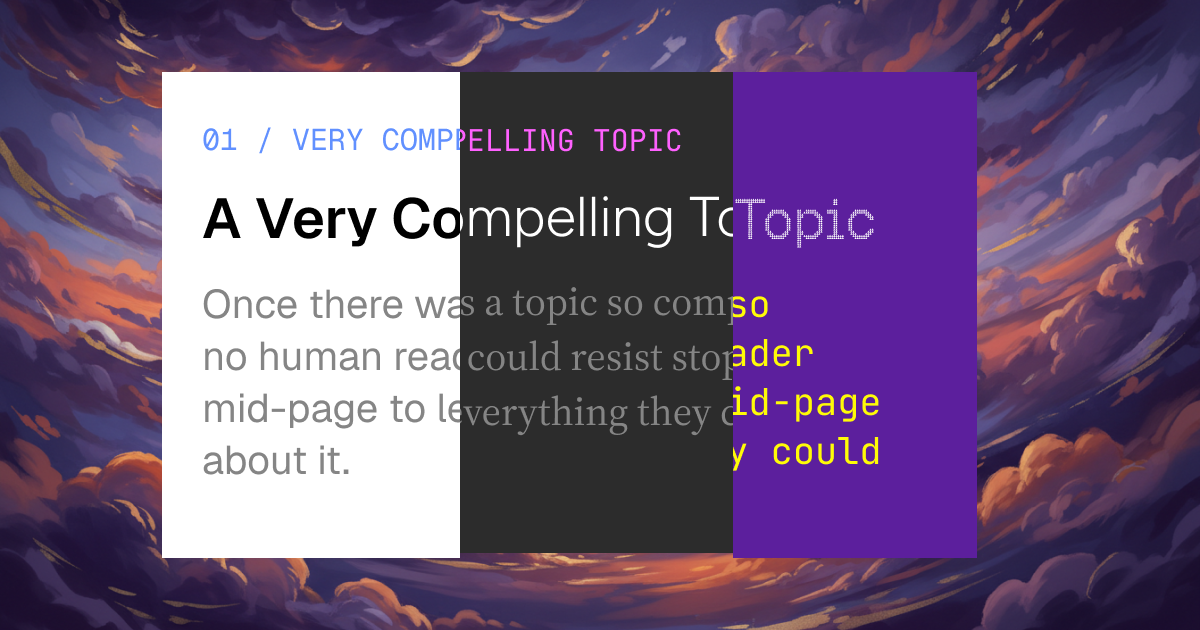
Claude, it turns out, loves numbered eyebrow labels. Some thoughts on how clients’ AI-assisted wireframes and mockups are impacting how we design finished websites.
Not by default. An AI-built site often has pages and features worth keeping, and throwing them away costs you time. The audit says what to keep, what to fix and what to replace. If a rebuild turns out to be the simpler path, we’ll tell you why before we start.
Yes. We read the code, run the site and write up what to keep, fix and replace. The findings are yours to hand to any developer, whether or not we do the rest of the work.
Usually not. It depends on your team and the rest of your stack. If your developers already work in React or Next.js, keeping the framework is often the better fit, and we clean up the site where it is.
Sites built with Lovable, v0, Claude Code and similar tools. Send us the link and, if you have one, read access to the repository. We don’t need production credentials to take a first look.
Because the people who edit your content shouldn’t have to work like developers. When an AI tool edits your code, every change goes through a branch, a pull request and a build that usually takes a couple of minutes, all before anyone can review a preview. That’s fine for a developer. Our founder, David Demaree, wrote a book about Git (Git for Humans), and he still doesn’t think your marketing lead should need it to fix a typo. In a CMS, editors see a change in a live preview and publish when it’s ready. It also gives you scheduling, history, approvals, and more than one person editing at once.
You may not need one, though. If your team is small and your editors are comfortable in a code workflow, a CMS can add more overhead than it saves, and we’ll tell you so.
Yes, and we’ll set the project up for it. Your coding agents get an AGENTS.md and reusable skills for your codebase. Through Sanity’s MCP server, they can also read and edit your content in the same place your team does. You decide where a person reviews their work before it goes live.
We scope and price each project after a first conversation.
It depends on how much the site has and how much needs to change. We scope it after the audit and agree on milestones before we start. If you have a launch date in mind, bring it to the first conversation.

We’ll tell you what to keep and what to fix.